The Calm Christmas Table: Ribbon Details for 2026 That Take Minutes
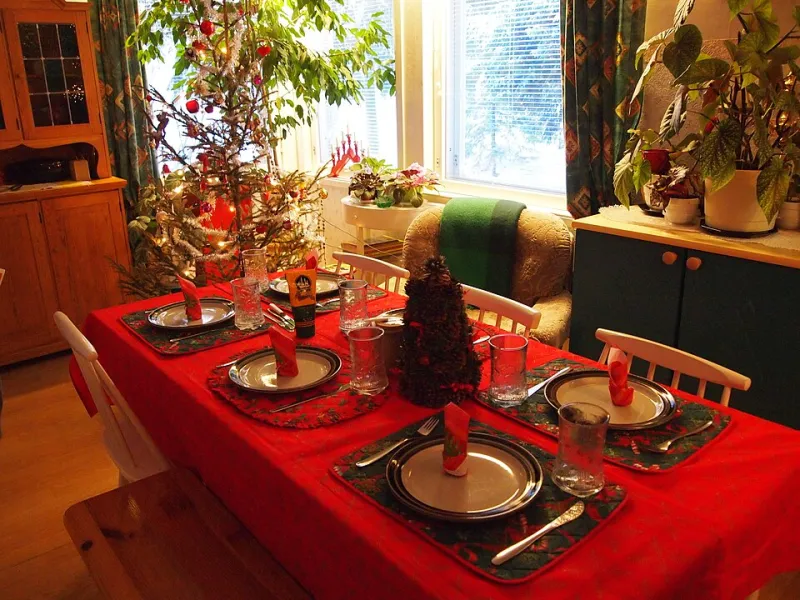
Photo: Miia Ranta from Finland, CC BY-SA 2.0, via Wikimedia Commons
A Christmas feast table does not need a full tablescape, a florist and three hours of fiddling. Often it needs one good idea repeated well. Ribbon is brilliant for this: it adds colour, texture and a handmade feel, yet it can be tied, snipped and adjusted while the oven is doing its thing. For Christmas 2026, think of ribbon as the quiet helper that makes the table look considered — not the fussy bit that sends you back to the cupboard for another roll.
Start with a colour story, not a shopping list
The easiest tables look pulled together because the colours repeat. Pick two or three ribbons and let them do different jobs. A simple formula is: one solid, one pattern, one texture. For a traditional UK Christmas table, try forest green grosgrain, a narrow cranberry satin and a copper-edged linen ribbon. For something calmer, use ecru cotton tape, midnight-blue velvet and a slim silver cord. If your Christmas china is patterned, keep the ribbons plain and let the plates sing.
Budget-friendly choices work beautifully here. Polyester satin gives shine without a huge spend, grosgrain holds its shape on napkins, paper raffia is lovely for a relaxed lunch, and cotton tape feels charming with kraft place cards. Charity shops and haberdashery baskets often turn up vintage ribbon that adds character for very little. Just check it is clean and wide enough for the job before you commit.
Napkins: the two-second tie that looks deliberate
Napkin ties are the quickest win on the whole table. Fold each napkin simply — a relaxed rectangle or a soft roll is fine — then wrap a 40–50cm length of ribbon around the middle and tie a single knot. Not a bow, not a double knot. A single knot with slightly uneven tails looks relaxed and intentional. Trim the ends at an angle or into a shallow notch, and keep tails to about 5–8cm so they do not dangle into the gravy.
Use 15–25mm grosgrain or velvet for a bit of body. If you want extra festive detail, tuck a small rosemary sprig or a cinnamon stick under the knot. For a more formal setting, double-faced satin in a deep colour looks polished; for a Boxing Day buffet, cotton tape or raffia keeps things casual. The trick is to tie them the night before, then leave them on a tray so the table can be set in minutes.
Cutlery pockets and cracker trims
Cutlery bundles are another place where ribbon earns its keep. Lay a knife, fork and spoon on a napkin, roll or fold, then tie with a 25mm ribbon. A simple shoelace bow here is allowed — it is sturdier than it looks and easy to undo. If you are using a wide ribbon, a 38–50mm strip can be folded into a small pocket and stapled or glued at the sides, but honestly, a tied bundle is faster and just as charming.
Christmas crackers are a natural fit for ribbon, too. If you make or refresh crackers, replace the plastic tie with a narrow 6–10mm ribbon. Tie it firmly but not so tight that the cracker buckles. A tiny tag with a name can be threaded on before tying. This is also a good use for leftover odds and ends: one cracker can carry red, another green, another gold, as long as the overall table colour story holds together.
Place cards and wine tags
Place cards do not need calligraphy. Cut plain card into small rectangles or luggage-tag shapes, punch a hole and thread through a short length of 3–6mm ribbon. Tie it around a napkin or lay it on the plate. For a wine bottle, make a simple tag and tie it around the neck with narrow satin or cotton tape. Write the name on one side and a tiny message on the other. It takes seconds, saves the “whose glass is whose?” conversation and looks lovely on a sideboard.
This is also where a mixed table can shine. Use the same narrow ribbon for place cards and wine tags, then a wider version of the same colour on napkins. Repetition makes the table feel designed, even when the ribbons came from the bottom of your stash.
The mix-and-match formula that keeps it easy
A good rule is 70/20/10. Let about 70 per cent of the ribbon be your base colour — perhaps a natural linen or deep green. Give 20 per cent to an accent, such as cranberry or copper. Leave 10 per cent for a little sparkle, like a metallic cord or a patterned ribbon. That way the table has depth without looking like a craft shop exploded over the turkey.
Texture matters as much as colour. Matt grosgrain next to shiny satin feels richer than either one alone. Velvet adds warmth, raffia adds a rustic note, and a fine metallic cord catches the candlelight. Keep widths varied, too: wide ribbon on napkins, medium on cutlery, narrow on tags and crackers. If you are buying new ribbon for 2026, choose two reusable colours you genuinely love rather than a short-lived novelty print.
Quick techniques worth practising once
Use sharp scissors and cut ribbon on the diagonal to reduce fraying. A tiny dot of clear drying glue or a fray-check product helps on satin. Pre-cut napkin ribbons and place-card lengths the day before and keep them in a small box with your scissors and tags. For a neat bow, make two loops and tie them like shoelaces; for a relaxed look, use a single knot and trim the tails. If a ribbon refuses to behave, a light press with a cool iron on the reverse — check the care label first — usually settles it.
The real secret is not perfection. It is repetition. One ribbon idea used on napkins, crackers and wine tags will always look more effortless than five different ideas competing for attention. At Ribbon Warehouse, we like a table that feels welcoming rather than staged — the kind where someone can move a napkin without wrecking the display.
So this Christmas 2026, let ribbon do a little quiet work. Tie the napkins, tag the wine, trim the crackers and step away. The table will look thoughtful, the host will look calm, and there will still be time to find the serving spoon.