One Stash, Every Season: Building a Ribbon Palette That Always Works
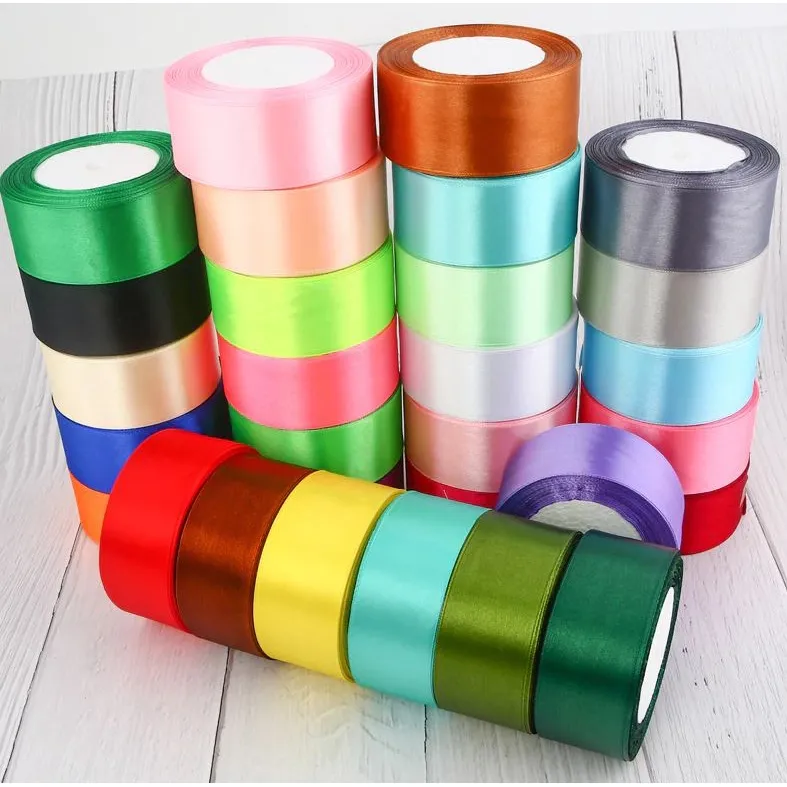
Photo: ribbon colour swatch cards palette assortment reels craft flat lay, via down-my.img.susercontent.com
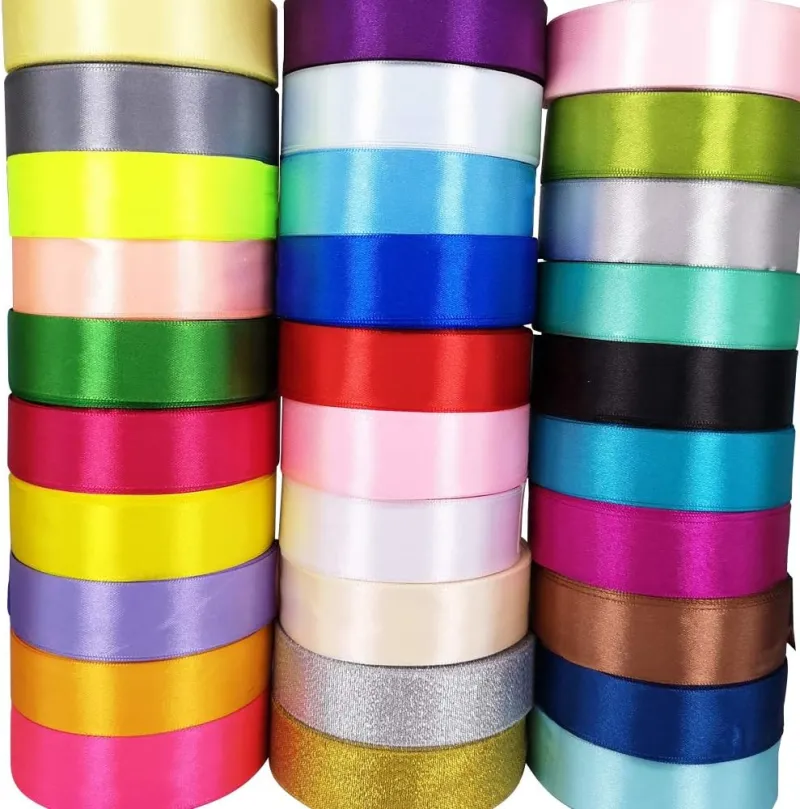
Every ribbon drawer has one: the roll bought in a panic for a specific present, in a colour that matches absolutely nothing else you own. It sits there for years, slightly creased, quietly reproachful. The fix is not to buy more ribbon — it is to buy more deliberately. A coherent palette of eight to twelve ribbons will cover almost every occasion in the UK calendar, and it makes wrapping faster because you are choosing from a set that already works together.
Start with three anchors, not thirty
Colour theory sounds intimidating, but the practical version is simple. Choose a light, a middle and a dark. In ribbon terms that might be ivory, sage and forest green, or cream, blush and burgundy, or white, denim blue and navy. Everything else you add should relate to one of those three anchors.
If you want a slightly more formal rule, think in proportions: roughly 60 per cent of your ribbon should be a neutral base, 30 per cent a supporting colour and 10 per cent a highlight. That is why a drawer full of bright novelty rolls feels chaotic while a drawer of ivory, red and gold feels instantly festive.
Two relationships are worth knowing. Analogous colours sit next to each other on the wheel — blue, teal and green, for example — and always look calm together. Complementary colours sit opposite one another, such as deep red and forest green, and create contrast. You do not need to memorise the wheel; you just need to notice which combinations make you feel something.
Let the UK seasons do the work
British colour is unusually generous because our seasons are so distinct. Spring offers daffodil yellow, apple-blossom pink and soft sage. Summer brings coastal blues, sand, chalk white and a touch of coral. Autumn is heather purple, rust, moss and oat. Winter gives us berry red, evergreen, tartan and a little metallic shimmer.
A palette built around those seasonal families will always look at home on a UK gift table. It also means your ribbon stash can shift gradually through the year instead of being packed away in January. Buy one or two seasonal accents each year and let the core anchors stay put.
Mix widths like you mean it
The quickest way to make a wrapped gift look professional is to layer two widths. A broad 38mm ribbon as the base with a 6mm ribbon over the top creates depth without extra effort. As a rough guide:
- 3mm and 6mm for tags, place cards and delicate details
- 10mm and 15mm for everyday bows and jar decoration
- 25mm for statement bows and napkin rings
- 38mm and 50mm for wreaths, large boxes and door decor
Texture matters just as much as colour. Satin catches the light, grosgrain has a matte ribbed finish that photographs beautifully, velvet feels luxurious and hessian brings a rustic edge. Organza adds lightness for weddings and summer gifts. Keeping one of each finish in your anchor colours gives you variety without visual noise.
Patterns without the chaos
The safest rule for pattern mixing is one printed ribbon plus two plain ribbons in the same palette. If the pattern is large, keep the plains quiet. If the pattern is small, such as a fine polka dot or a narrow check, you can afford a bolder companion colour.
Tartan deserves a special mention because it behaves like a neutral in a UK winter wardrobe. A red and green tartan ribbon will sit happily alongside plain velvet, hessian and gold. Treat it as your pattern and let everything else support it.
The swatch-card method
This is the single most useful thing you can do for your ribbon stash. You will need an A6 piece of card, a hole punch, a stapler or tape, and a pen.
- Cut a 10cm length of every ribbon you own.
- Notch the ends neatly and attach each one to the card in colour order.
- Label the width, finish and fibre — for example, 15mm grosgrain, polyester.
- Punch a hole in the corner and keep the cards on a metal ring.
Take the ring to the shop with you. It stops you buying a fourth roll of the same ivory satin and shows you instantly whether a new colour will fit. Photograph your cards in daylight too, so you have a reference on your phone when you are shopping online.
Once you have done this for your whole stash, make a smaller go-to card of the eight ribbons you reach for most. That is your working palette — the one that lives in the drawer rather than the box.
A capsule stash for a UK year
If you were starting from scratch, this is a sensible core:
- Ivory or cream in 10mm satin and 25mm grosgrain
- Oatmeal or kraft in 15mm hessian-look ribbon
- A deep red in 25mm velvet
- Forest or sage green in 10mm grosgrain
- Navy or black in 6mm satin for formal gifts
- One metallic, either gold or silver, in 6mm
Add two seasonal accents each year and you will never be short of options. Buy three-metre reels of the basics and two-metre lengths of the accents — enough to wrap several gifts without committing to a colour you might tire of.
A quick occasion cheat sheet
Birthday. Bright anchor plus white, with a patterned ribbon for fun. Satin and grosgrain work well together.
Wedding. Ivory, sage and dusty blue, or cream and soft grey. Layer satin with velvet and keep patterns minimal.
Teacher gift. Kraft brown, navy and a small print. Hessian ribbon and a handwritten tag feel thoughtful rather than expensive.
Christmas. Berry red, forest green and gold, with tartan as the pattern. Velvet for the main bow and 6mm satin to tie the tag.
Store it so you actually use it
Keep ribbons out of direct sunlight, which fades satin quickly. Wrap each reel with its own tail so it does not unravel, and store them upright in a box divided by colour family rather than by size. The palette should be visible at a glance — if you have to dig, you will default to the same tired roll every time.
A good ribbon stash is not the biggest one. It is the one where every roll has a job, and where a Tuesday-night birthday present can be made to look considered in under two minutes.