The Wedding Ribbon Edit: Where to Spend, Where to Save and What the Venue Will Actually Allow
Start with the venue, not the ribbon drawer
Wedding ribbon planning usually begins with a colour palette and a Pinterest board. In the UK, it should begin with a quick email to the venue. Churches, barns, hotels and village halls all have their own views on what can be tied, taped, draped or dangled, and it is far easier to design around those rules than to argue with a churchwarden on the Friday before the big day.
Ask three questions: can we tie ribbons to pews or chairs, can we use adhesives, and are there any fire-safety restrictions around candles or lanterns? Some venues will ask for flame-retardant ribbon or prefer you to keep fabric well away from naked flames. Others are relaxed about chair backs but firm about historic woodwork. Get the answers in writing, then build your ribbon plan around them. It saves money, saves stress and makes you look wonderfully organised.
The wedding ribbon shopping list that actually earns its keep
For a 2026 wedding, a sensible ribbon stash usually includes a few workhorse widths rather than dozens of pretty oddments. Think 10mm and 15mm for favours and place cards, 25mm for napkins and welcome signs, 38mm for pew bows and chair details, and 50mm for car ribbons or statement door bows. Grosgrain is brilliant for a crisp, tailored look and holds a knot well. Satin gives a polished finish but can mark if it is handled too much. Velvet is gorgeous for winter weddings, while organza and lightweight chiffon are lovely for soft, floaty details — just check they are not too delicate for outdoor use.
Buy by the reel where you can, then pre-cut at home with sharp scissors. A 20-metre reel of 25mm grosgrain will usually go further than a bundle of short lengths, and it gives you room for mistakes. If you are mixing colours, pick one main ribbon and one accent rather than five equal stars. Your tables, pews and car will look intentional instead of overexcited.
Pew bows, chair backs and the church rules
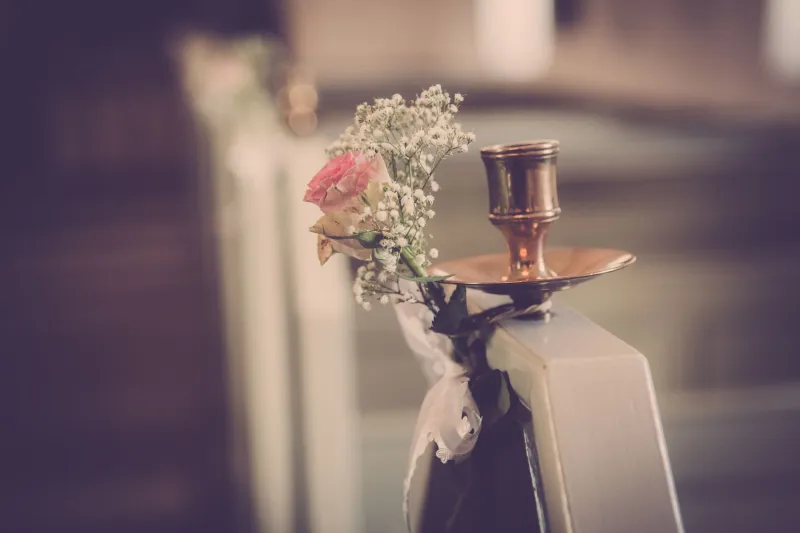
Church pew bows are one of the loveliest traditions, but they need a light touch. Ask before tying anything to pews, and never use sticky tape or pins on polished wood. Elastic loops, ribbon ties or clip-on bows are usually kinder. A simple bow made from 38mm grosgrain, with tails cut at an angle, looks smart without turning the aisle into a craft fair. If the church has a flower guild, check whether your ribbons will clash with their arrangements — or better still, coordinate.
For civil venues, chair backs are your friend. A single wide ribbon tied in a loose knot, with a sprig of dried lavender or a small name tag, can dress a whole room without a florist’s bill. Keep tails short enough that guests will not trip, especially on stone floors or lawns. And if the venue has a no-fixings rule, consider ribbon wands for the exit or a ribbon backdrop on a freestanding frame instead.
Car ribbons: pretty, secure and legal
Wedding car ribbons are a British classic, but they must be practical. Use a wide, weather-resistant ribbon — 50mm grosgrain or a sturdy satin is better than a fine organza that will shred on the motorway. Secure it with suction cups or strong ties to door handles, not to number plates, lights or mirrors. Never let a tail trail near wheels, the exhaust or the ground. Check that the ribbon does not obscure your view or your lights, and remove it before the happy couple drive off on honeymoon. A quick tug-test in the driveway is worth more than a thousand photos.
Welcome signs, favours and tables
Welcome signs are where ribbon earns its keep. A 25mm to 38mm ribbon tied around a framed sign, with a generous bow at the top, looks welcoming and photographs beautifully. If the sign will stand outside, choose a ribbon that can cope with a shower and avoid ink that will run. Inside, a ribbon garland across a table or a simple bow on a menu adds colour for very little.
Favour ties are the perfect job for 10mm satin or grosgrain. Pre-cut lengths of about 30cm, then tie them around little jars of sweets, seed packets or charity pins. If you are making 80 favours, do it in front of a film with a friend and a pot of tea. For place settings, a narrow ribbon around a folded napkin, with a name card tucked in, takes minutes and looks considered. Keep table ribbons away from candles, tea lights and anything that gets hot. If in doubt, use LED candles and put the ribbon where it can be admired without being singed.
The budget-friendly bit
Ribbon can be as cheap or as costly as you make it. The trick is to decide where it will be seen most. Spend on the car ribbons, the welcome sign and the pew bows — the details that appear in every guest photo. Save on napkin ties and favour ribbons by choosing narrower widths and simpler knots. Buy one excellent reel for the focal points and use a cheaper matching ribbon for the background jobs. And always order a little extra: not because you will definitely need it, but because matching dye lots can be a nuisance if you run short.
After the confetti: reusing the leftovers
Do not bin the ribbons. Wash or wipe anything that has been outdoors, untie the knots gently and wind the lengths back onto card. Leftover grosgrain makes excellent gift wrap, jam-jar ties and plant supports. Pretty satin can become hair ribbons, drawer pulls or scrapbook keepsakes. Pew bows can be donated to a local craft group or school, and a few lengths kept in a memory box will make you smile in years to come. A wedding ribbon that lives on for Christmas presents and birthday parcels is a very good investment indeed.
At Ribbon Warehouse, we like a wedding plan that is beautiful, sensible and a little bit reusable. Start with the venue rules, choose a few reliable widths, secure anything that might fly away, and keep the best ribbon for the moments everyone will actually see.