Soft Ties and Show Benches: Ribbon's Quiet Role on the 2026 Allotment
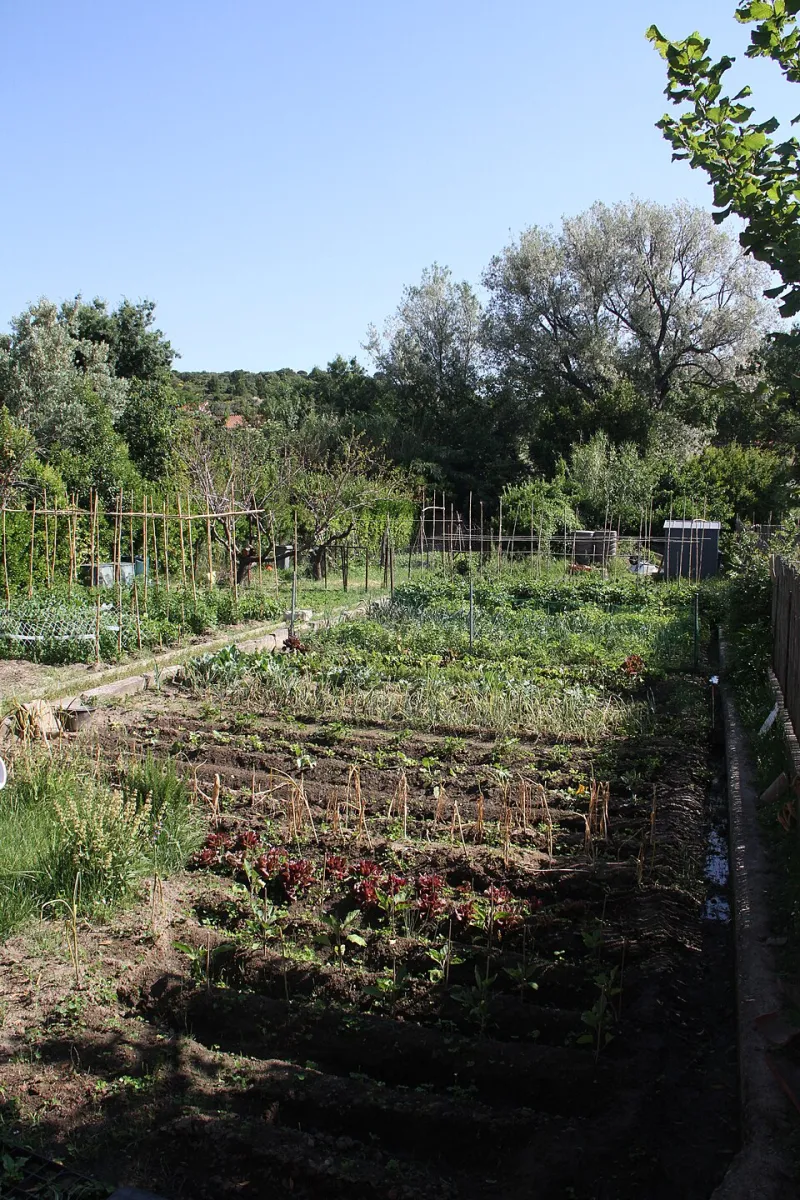
Photo: Danfoxinbox, CC BY-SA 3.0, via Wikimedia Commons
There's a moment every spring when the shed stops being a dumping ground and starts being a workshop. The seed tin comes out, the labels get sharpened, and somewhere at the back, a tangled ball of last year's ribbon gets unceremoniously dropped on the bench. Good. Because ribbon is one of the most quietly useful things you can keep down at the allotment — and it does far more than decorate a jar of jam in September.
This is a gentle nudge to think of ribbon as a growing tool, not just a wrapping one. Used well, it holds, marks, labels and finishes, all without asking anything of the plant in return.
Which Ribbons Actually Survive the Great Outdoors
A quick reality check before you raid the pretty drawer: silk and satin are for indoors. On a windy plot in March, they'll fray, sag and look sorry for themselves by April. What you want instead is ribbon with a bit of grit.
Polyester grosgrain is the workhorse — strong, colourfast, and it holds a knot without slipping. Cotton twill is softer against stems and biodegrades over a season or two, which some gardeners prefer. Jute and hessian ribbon is brilliant for harvest bundles and looks the part on a show bench. Raffia is the classic for tomatoes and sweet peas, though it does dry out and snap eventually. And if you want colour that lasts from June to October, woven polypropylene is genuinely tough — just avoid the shiny gift-wrap stuff, which has all the tensile strength of a wet crisp.
A decent rule of thumb: if it would survive a British summer holiday, it'll survive your runner beans.
Tying Without Strangling: Gentle Knots for Stems
The old mistake is tying tight. A stem thickens as it grows, and a snug ribbon in May becomes a tourniquet by July. Always leave a finger's width of give — enough that the plant can sway, not so much that it flops.
The figure-of-eight is your friend here. Pass the ribbon around the stake, cross it over itself, then loop around the stem and tie off at the stake. The plant is supported but never pinched. For tomatoes, sweet peas and anything climbing, this is the knot that keeps everything upright without bruising the stem.
For heavier jobs — a leaning sunflower, a laden branch of apples — use a wider ribbon, 25mm or more, so the load spreads across a bigger area of bark. Thin ribbon under weight cuts in. And on soft-stemmed things like courgettes and dahlias, a strip of cotton twill is kinder than anything synthetic.
Labels, Tags and the End of the Mystery Row
Every plot has one. The row you were absolutely sure was carrots, now a green blur of something. Ribbon fixes this cheaply. Thread a short length through the hole of a plant label and tie it off — colour-coded by crop family, by sowing date, or by whichever child was 'helping' that afternoon. A pink ribbon means brassicas, a green one means salad, a stripe means 'please don't tread here'.
For seed packets stored in a tin, a small loop of ribbon around each bundle keeps varieties together and makes the whole thing feel less like a lucky dip. It's a small touch, but it turns a shoebox of chaos into something you can actually use on a wet Tuesday in February.
Harvest Bundles and the Village Show Bench
Here's where ribbon earns its keep twice over. A bundle of rhubarb, a posy of sweet peas, a handful of herbs for a neighbour — tied with jute or a strip of gingham, it stops looking like a plastic bag of veg and starts looking like a gift. That matters more than we admit. Half the pleasure of growing is the giving.
Come show season — and 2026 will bring the usual flurry of village shows, allotment society competitions and county events — ribbon steps up again. Rosettes and sashes are, after all, just ribbon doing its finest work. If you're making your own class markers or dressing a display table, keep colours simple and coordinated: two shades, one texture, tidy tails. Judges notice neatness more than novelty.
Shed Storage That Doesn't End in a Bird's Nest
Ribbon in a shed has two enemies: damp and mice. Both love a loose coil at the back of a shelf.
A few things that work: wind short lengths around clothes pegs and clip them to a strip of batten on the wall; keep longer reels in a sealed tin with a silica sachet; and store offcuts in a jam jar sorted by colour. If you're feeling organised, a small pegboard with one reel per hook is genuinely transformative — and it makes the shed feel like a proper workshop rather than a place where things go to be forgotten.
A 2026 Plot Calendar in Ribbon
February to March — label season. Cut tags, thread ribbon, plan rows.
April to June — tying season. Figure-of-eights on everything that climbs.
July to September — harvesting and bundling. Jute, raffia, gingham.
Late summer — show prep. Check your sash stash before the schedule goes up.
October to December — the quiet jobs. Clean, sort, store, and maybe tie a wreath or two while you're at it.
Ribbon won't grow your tomatoes or dig your beds. But it will hold, mark, finish and celebrate everything you do on the plot — and it costs pennies to do it. That's a rather good deal for a length of coloured string.